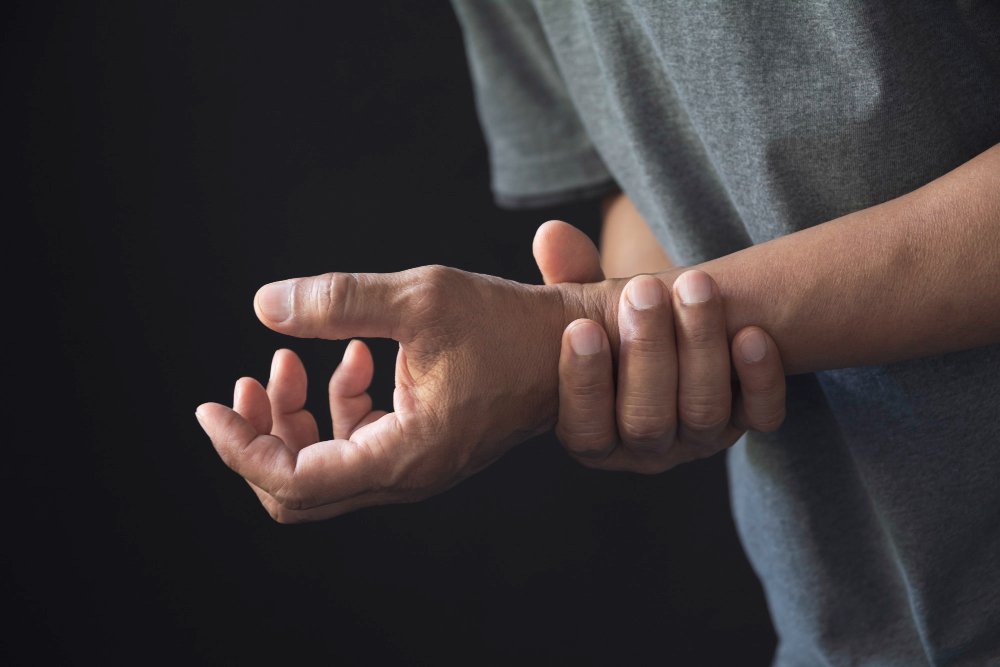
De Quervain’s tenosynovitis is a painful overuse condition affecting the tendons on the thumb side of the wrist. Everyday activities like lifting a child, typing, gripping weights, or texting can become surprisingly difficult. While traditional medical treatments such as splinting, anti-inflammatory medication, and corticosteroid injections are commonly recommended, many patients seek conservative, non-invasive care options — including chiropractic treatment.
Below, we explore how chiropractic care for De Quervain’s Tenosynovitis may support recovery, supported by current clinical evidence on tendon rehabilitation, manual therapy, biomechanics, and conservative management strategies. For more information, reach out to one of our chiropractors today!
Understanding De Quervain’s Tenosynovitis
De Quervain’s tenosynovitis involves inflammation and thickening of the tendon sheath surrounding the:
- Abductor Pollicis Longus (APL)
- Extensor Pollicis Brevis (EPB)
These tendons pass through the first dorsal compartment of the wrist. Repetitive strain or biomechanical dysfunction increases friction within this sheath, resulting in pain and restricted motion.
Clinical Presentation
- Pain at the radial (thumb) side of the wrist
- Swelling and tenderness
- Pain with gripping or lifting
- Positive Finkelstein test
Epidemiology:
De Quervain’s is more common in women and frequently occurs postpartum. A large epidemiological review by Wolf et al. (2009) found higher incidence rates in females aged 30–50.
What Does the Research Say About Conservative Treatment?
Evidence supports non-surgical treatment as first-line care.
Splinting & Corticosteroid Injections
- A systematic review by Richie & Briner (2003) found corticosteroid injections to be effective in 50–80% of cases.
- However, recurrence and tendon degeneration risks exist with repeated injections.
Exercise-Based Tendon Rehabilitation
Research on tendinopathy (including wrist and upper extremity conditions) strongly supports progressive loading programs.
- Malliaras et al. (2013) demonstrated that eccentric and heavy-slow resistance exercises improve tendon remodeling.
- Kongsgaard et al. (2009) showed structural tendon improvements with progressive loading.
While these studies focused on Achilles and patellar tendons, tendon physiology principles apply broadly, including wrist tendons.
How Chiropractic Care for De Quervain’s Tenosynovitis Aligns With Evidence-Based Principles
Chiropractic care often combines joint mobilization, soft tissue therapy, and rehabilitative exercise — all supported by musculoskeletal research.
1. Joint Mobilization & Manual Therapy
Manual therapy has strong support for upper extremity conditions.
- A systematic review by Ho et al. (2009) found manual therapy effective for lateral epicondylalgia (tennis elbow), a similar tendon overuse condition.
- Bialosky et al. (2009) demonstrated that joint manipulation produces neurophysiological effects that reduce pain sensitivity.
Restoring wrist, elbow, and cervical joint mobility may reduce abnormal tendon loading patterns.
2. Addressing the Kinetic Chain
Research increasingly supports regional interdependence — the concept that dysfunction in one area can contribute to pain elsewhere.
- Wainner et al. (2007) demonstrated that cervical spine mobilization improved symptoms in patients with elbow pain.
- Sueki et al. (2013) highlighted the role of cervical nerve mobility in upper extremity pain syndromes.
Because the radial nerve and cervical spine influence wrist function, evaluating proximal mechanics is clinically relevant.
3. Soft Tissue Therapy
Chiropractors frequently use:
- Instrument-assisted soft tissue mobilization (IASTM)
- Myofascial release
- Cross-friction massage
Evidence:
- Cheatham et al. (2016) reported that IASTM may improve range of motion and reduce pain in musculoskeletal conditions.
- A Cochrane review on deep friction massage suggests potential benefit when combined with exercise therapy.
Improving tendon glide reduces compressive stress within the first dorsal compartment.
4. Therapeutic Exercise & Load Management
Modern tendinopathy management emphasizes:
- Progressive loading
- Eccentric strengthening
- Grip conditioning
- Gradual return to activity
Silbernagel et al. (2007) demonstrated that combined eccentric-concentric loading improves tendon recovery compared to passive care.
Chiropractic rehabilitation protocols often incorporate these principles.
Benefits of Chiropractic Care for De Quervain’s Tenosynovitis
Based on current evidence and clinical practice models, chiropractic care may:
✔ Reduce mechanical stress on the thumb tendons
✔ Improve joint mobility
✔ Enhance circulation and tissue healing
✔ Address postural contributors
✔ Provide structured exercise progression
✔ Reduce reliance on medication
✔ Potentially delay or prevent surgical intervention
Surgery vs Conservative Care
Surgical release of the first dorsal compartment is typically reserved for refractory cases.
- A review by Ilyas et al. (2007) emphasizes conservative care before surgical intervention due to favorable outcomes in early-stage cases.
Chiropractic care fits well within the conservative-first treatment model recommended in orthopedic literature.
Limitations in Research
It is important to note:
- There are limited randomized controlled trials specifically evaluating chiropractic treatment for De Quervain’s.
- Much of the support comes from broader tendinopathy and manual therapy literature.
- Multimodal conservative care (exercise + manual therapy + load modification) has the strongest support.
Future research is needed to directly evaluate chiropractic-specific protocols for this condition.
Conclusion
Current musculoskeletal research supports a conservative, movement-based approach to tendon disorders. Chiropractic care aligns with many of these principles through:
- Manual therapy
- Joint mobilization
- Kinetic chain correction
- Evidence-based loading programs
For patients seeking a non-invasive, drug-free treatment option, chiropractic care can be a valuable part of a comprehensive recovery strategy for De Quervain’s tenosynovitis. Book with us today to see how we can help your thumb/wrist pain!
Selected References
- Richie CA, Briner WW. Corticosteroid injection for treatment of De Quervain’s tenosynovitis: A pooled quantitative literature evaluation. J Am Board Fam Pract. 2003.
- Wolf JM et al. Incidence of De Quervain’s tenosynovitis in a young, active population. J Hand Surg Am. 2009.
- Malliaras P et al. Achilles and patellar tendinopathy loading programs. Br J Sports Med. 2013.
- Kongsgaard M et al. Heavy slow resistance training in tendinopathy. Scand J Med Sci Sports. 2009.
- Bialosky JE et al. The mechanisms of manual therapy. Man Ther. 2009.
- Wainner RS et al. Cervical spine thrust manipulation and upper extremity pain. J Orthop Sports Phys Ther. 2007.
- Cheatham SW et al. The effects of instrument-assisted soft tissue mobilization. J Can Chiropr Assoc. 2016.
- Silbernagel KG et al. Eccentric loading for tendinopathy. Am J Sports Med. 2007.
- Ilyas AM et al. De Quervain tenosynovitis review. J Am Acad Orthop Surg. 2007.
As with any healthcare decision, patients should consult with qualified professionals and choose a treatment plan that aligns with their specific condition, goals, and overall health needs. Book today to see how one of our doctors can help you!